
Boot device: /pci@8,700000/ide@6/ cdrom @0,0:f File and args: Bad magic number >Есть необходимость снести 9-ку и установить 10ую с RTL диска Solaris 10 После скачивания проверял контрольную сумму iso?

Solaris is a Unix operating system originally developed by Sun Microsystems. It superseded their earlier SunOS in 1993. Oracle Solaris, as it is now known, has been owned by Oracle Corporation since Oracle's acquisition of Sun in January 2010. Solaris is known for its scalability, especially on SPARC systems, and for originating many innovative features such as DTrace, ZFS and Time Slider. Solaris supports SPARC-based and x86-based workstations and servers from Oracle and other vendors, with efforts underway to port to additional platforms. Solaris is registered as compliant with the Single Unix Specification. Historically, Solaris was developed as proprietary software. In June 2005, Sun Microsystems released most of the codebase under the CDDL license, and founded the OpenSolaris open source project. With OpenSolaris, Sun wanted to build a developer and user community around the software. After the acquisition of Sun Microsystems in January 2010, Oracle decided to discontinue the OpenSolaris distribution and the development model. Just ten days before the internal Oracle memo announcing this decision to employees was "leaked", Garrett D'Amore had announced the illumos project, creating a fork of the Solaris kernel and launching what has since become a thriving alternative to Oracle Solaris. In August 2010, Oracle discontinued providing public updates to the source code of the Solaris Kernel, effectively turning Solaris 11 into a closed source proprietary operating system. However, through the Oracle Technology Network (OTN), industry partners can still gain access to the in-development Solaris source code. Source code for the open source components of Solaris 11 is available for download from Oracle. In 1987, AT&T Corporation and Sun announced that they were collaborating on a project to merge the most popular Unix variants on the market at that time: BSD, System V, and Xenix. This became Unix System V Release 4 (SVR4). On September 4, 1991, Sun announced that it would replace its existing BSD-derived Unix, SunOS 4, with one based on SVR4. This was identified internally as SunOS 5, but a new marketing name was introduced at the same time: Solaris 2. Although SunOS 4.1.x micro releases were retroactively named Solaris 1 by Sun, the Solaris name is used almost exclusively to refer to the SVR4-derived SunOS 5.0 and later. The justification for this new "overbrand" was that it encompassed not only SunOS, but also the OpenWindows graphical user interface and Open Network Computing (ONC) functionality. The SunOS minor version is included in the Solaris release number. For example, Solaris 2.4 incorporated SunOS 5.4. After Solaris 2.6, Sun dropped the "2." from the number, so Solaris 7 incorporates SunOS 5.7, and the latest release SunOS 5.11 forms the core of Solaris 11.2. Solaris uses a common code base for the platforms it supports: SPARC and i86pc (which includes both x86 and x86-64). Solaris has a reputation for being well-suited to symmetric multiprocessing, supporting a large number of CPUs. It has historically been tightly integrated with Sun's SPARC hardware (including support for 64-bit SPARC applications since Solaris 7), with which it is marketed as a combined package. This has led to more reliable systems, but at a cost premium compared to commodity PC hardware. However, it has supported x86 systems since Solaris 2.1 and 64-bit x86 applications since Solaris 10, allowing Sun to capitalize on the availability of commodity 64-bit CPUs based on the x86-64 architecture. Sun has heavily marketed Solaris for use with both its own "x64" workstations and servers based on AMD Opteron and Intel Xeon processors, as well as x86 systems manufactured by companies such as Dell, Hewlett-Packard, and IBM. As of 2009, the following vendors support Solaris for their x86 server systems: Dell – will "test, certify, and optimize Solaris and OpenSolaris on its rack and blade servers and offer them as one of several choices in the overall Dell software menu" IBM – also distributes Solaris and Solaris Subscriptions for select x86-based IBM System x servers and BladeCenter servers Intel Hewlett-Packard – distributes and provides software technical support for Solaris on ProLiant server and blade systems Fujitsu Siemens As of July 2010, Dell and HP certify and resell Oracle Solaris, Oracle Enterprise Linux and Oracle VM on their respective x86 platforms, and IBM stopped direct support for Solaris on x64 kit.[ Solaris 2.5.1 included support for the PowerPC platform (PowerPC Reference Platform), but the port was canceled before the Solaris 2.6 release. In January 2006 a community of developers at Blastwave began work on a PowerPC port which they named Polaris. In October 2006, an OpenSolaris community project based on the Blastwave efforts and Sun Labs' Project Pulsar, which re-integrated the relevant parts from Solaris 2.5.1 into OpenSolaris, announced its first official source code release. A port of Solaris to the Intel Itanium architecture was announced in 1997 but never brought to market. On November 28, 2007, IBM, Sun, and Sine Nomine Associates demonstrated a preview of OpenSolaris for System z running on an IBM System z mainframe under z/VM, called Sirius (in analogy to the Polaris project, and also due to the primary developer's Australian nationality: HMS Sirius of 1786 was a ship of the First Fleet to Australia). On October 17, 2008 a prototype release of Sirius was made available and on November 19 the same year, IBM authorized the use of Sirius on System z IFL processors. Solaris also supports the Linux platform ABI, allowing Solaris to run native Linux binaries on x86 systems. This feature is called "Solaris Containers for Linux Applications" or SCLA, based on the branded zones functionality introduced in Solaris 10 8/07. Solaris can be installed from various pre-packaged software groups, ranging from a minimalistic "Reduced Network Support" to a complete "Entire Plus OEM". Installation of Solaris is not necessary for an individual to use the system. Additional software, like Apache, MySQL, etc. can be installed as well in a packaged form from sunfreeware and OpenCSW. Solaris can be installed from physical media or a network for use on a desktop or server, or be without installing on a desktop or server.[ Early releases of Solaris used OpenWindows as the standard desktop environment. In Solaris 2.0 to 2.2, OpenWindows supported both NeWS and X applications, and provided backward compatibility for SunView applications from Sun's older desktop environment. NeWS allowed applications to be built in an object oriented way using PostScript, a common printing language released in 1982. The X Window System originated from MIT's Project Athena in 1984 and allowed for the display of an application to be disconnected from the machine where the application was running, separated by a network connection. Sun’s original bundled SunView application suite was ported to X. Sun later dropped support for legacy SunView applications and NeWS with OpenWindows 3.3, which shipped with Solaris 2.3, and switched to X11R5 with Display Postscript support. The graphical look and feel remained based upon OPEN LOOK. OpenWindows 3.6.2 was the last release under Solaris 8. The OPEN LOOK Window Manager (olwm) with other OPEN LOOK specific applications were dropped in Solaris 9, but support libraries were still bundled, providing long term binary backwards compatibility with existing applications. The OPEN LOOK Virtual Window Manager (olvwm) can still be downloaded for Solaris from sunfreeware and works on releases as recent as Solaris 10. Sun and other Unix vendors created an industry alliance to standardize Unix desktops. As a member of COSE, the Common Open Software Environment initiative, Sun helped co-develop the Common Desktop Environment. CDE was an initiative to create a standard Unix desktop environment. Each vendor contributed different components: Hewlett-Packard contributed the window manager, IBM provided the file manager, and Sun provided the e-mail and calendar facilities as well as drag-and-drop support (ToolTalk). This new desktop environment was based upon the Motif look and feel and the old OPEN LOOK desktop environment was considered legacy. CDE unified Unix desktops across multiple open system vendors. CDE was available as an unbundled add-on for Solaris 2.4 and 2.5, and was included in Solaris 2.6 through 10. In 2001, Sun issued a preview release of the open-source desktop environment GNOME 1.4, based on the GTK+ toolkit, for Solaris 8. Solaris 9 8/03 introduced GNOME 2.0 as an alternative to CDE. Solaris 10 includes Sun's Java Desktop System (JDS), which is based on GNOME and comes with a large set of applications, including StarOffice, Sun's office suite. Sun describes JDS as a "major component" of Solaris 10. The Java Desktop System is not included in Solaris 11 which instead ships with a stock version of GNOME. Likewise, CDE applications are no longer included in Solaris 11, but many libraries remain for binary backwards compatibility. The open source desktop environments KDE and Xfce, along with numerous other window managers, also compile and run on recent versions of Solaris. Sun was investing in a new desktop environment called Project Looking Glass since 2003. The project has been inactive since late 2006. From 2005–2010, when Solaris was still being developed by Sun Microsystems, Solaris' source code (with a few exceptions) was released under the Common Development and Distribution License (CDDL) via the OpenSolaris project. When Sun was acquired by Oracle in 2010 the OpenSolaris project was discontinued after the board became unhappy with Oracle's stance on the project. In March 2010, the previously freely available Solaris 10 was placed under a restrictive license that limited the use, modification and redistribution of the operating system. The license allowed the user to download the operating system free of charge, through the Oracle Technology Network, and use it for a 90 day trial period. After that trial period had expired the user would then have to purchase a support contract from Oracle to continue using the operating system. With the release of Solaris 11 in 2011 the license terms changed again. The new license allows Solaris 10 and Solaris 11 to be downloaded free of charge from the Oracle Technology Network and used without a support contract indefinitely however the license only expressly permits the user to use Solaris as a development platform and expressly forbids commercial and "production" use. There is some uncertainty over whether Solaris can be used at home for hobbyist and educational purposes. Oracle has not officially clarified its position on home use. When Solaris is used without a support contract it can be upgraded annually to each new "point release" however a support contract is required for access to patches and updates that are released monthly. Notable features of Solaris currently include DTrace, Doors, Service Management Facility, Solaris Containers, Solaris Multiplexed I/O, Solaris Volume Manager, ZFS, and Solaris Trusted Extensions. Updates to Solaris versions are periodically released, such as Solaris 10 10/09. In ascending order, the following versions of Solaris have been released: Colour Meaning Red Release no longer supported Orange Sustaining Support Indefinite Green Release still supported Blue Future release Solaris version SunOS version Release date End of support Major new features SPARC x86 1.x 4.1.x 1991–1994 – September 2003 SunOS 4 rebranded as Solaris 1 for marketing purposes. See SunOS article for more information. 2.0 5.0 June 1992 – January 1999 Preliminary release (primarily available to developers only), support for only the sun4c architecture. First appearance of NIS+. 2.1 5.1 December 1992 May 1993 April 1999 Support for sun4 and sun4m architectures added; first Solaris x86 release. First Solaris 2 release to support SMP. 2.2 5.2 May 1993 – May 1999 SPARC-only release. First to support sun4d architecture. First to support multithreading libraries (UI threads API in libthread). 2.3 5.3 November 1993 – June 2002 SPARC-only release. OpenWindows 3.3 switches from NeWS to Display PostScript and drops SunView support. Support added for autofs and CacheFS filesystems. 2.4 5.4 November 1994 September 2003 First unified SPARC/x86 release. Includes OSF/Motif runtime support. 2.5 5.5 November 1995 December 2003 First to support UltraSPARC and include CDE, NFSv3 and NFS/TCP. Dropped sun4 (VMEbus) support. POSIX.1c-1995 pthreads added. Doors added but undocumented. 2.5.1 5.5.1 May 1996 September 2005 The only Solaris release that supports PowerPC; Ultra Enterprise support added; user and group IDs (uid_t, gid_t) expanded to 32 bits, also included processor sets and early resource management technologies. 2.6 5.6 July 1997 July 2006 Includes Kerberos 5, PAM, TrueType fonts, WebNFS, large file support, enhanced procfs. SPARCserver 600MP series support dropped. 7 5.7 November 1998 August 2008 The first 64-bit UltraSPARC release. Added native support for file system meta-data logging (UFS logging). Dropped MCA support on x86 platform. Sun dropped the prefix "2." in the Solaris version number, leaving "Solaris 7." Last update was Solaris 7 11/99. 8 5.8 February 2000 March 2012 Includes Multipath I/O, Solstice DiskSuite, IPMP, first support for IPv6 and IPsec (manual keying only), mdb modular debugger. Introduced Role-Based Access Control (RBAC); sun4c support removed. Last update is Solaris 8 2/04. 9 5.9 May 28, 2002 January 10, 2003 October 2014 iPlanet Directory Server, Resource Manager, extended file attributes, IKE IPsec keying, and Linux compatibility added; OpenWindows dropped, sun4d support removed. Most current update is Solaris 9 9/05 HW. 10 5.10 January 31, 2005 January 2021 Includes x86-64 (AMD64/Intel 64) support, DTrace (Dynamic Tracing), Solaris Containers, Service Management Facility (SMF) which replaces init.d scripts, NFSv4. Least privilege security model. Support for sun4m and UltraSPARC I processors removed. Support for EISA-based PCs removed. Adds Java Desktop System (based on GNOME) as default desktop. Solaris 10 1/06 (known internally as "U1") added the GRUB bootloader for x86 systems, iSCSI Initiator support and fcinfo command-line tool. Solaris 10 6/06 ("U2") added the ZFS filesystem. Solaris 10 11/06 ("U3") added Solaris Trusted Extensions and Logical Domains(sun4v). Solaris 10 8/07 ("U4") added Samba Active Directory support, IP Instances (part of the OpenSolaris Network Virtualization and Resource Control project), iSCSI Target support and Solaris Containers for Linux Applications (based on branded zones), enhanced version of the Resource Capping Daemon (rcapd). Solaris 10 5/08 ("U5") added CPU capping for Solaris Containers, performance improvements, SpeedStep support for Intel processors and PowerNow! support for AMD processors. Solaris 10 10/08 ("U6") added boot from ZFS and can use ZFS as its root file system. Solaris 10 10/08 also includes virtualization enhancements including the ability for a Solaris Container to automatically update its environment when moved from one system to another, Logical Domains support for dynamically reconfigurable disk and network I/O, and paravirtualization support when Solaris 10 is used as a guest OS in Xen-based environments such as Sun xVM Server. Solaris 10 5/09 ("U7") added performance and power management support for Intel Nehalem processors, container cloning using ZFS cloned file systems, and performance enhancements for ZFS on solid-state drives. Solaris 10 10/09 ("U8") added user and group level ZFS quotas, ZFS cache devices and nss_ldap shadowAccount Support, improvements to patching performance. Solaris 10 9/10 ("U9") added physical to zone migration, ZFS triple parity RAID-Z and Oracle Solaris Auto Registration. Solaris 10 8/11 ("U10") added ZFS speedups and new features, Oracle Database optimization, faster reboot on SPARC system. Solaris 10 1/13 ("U11") see release notes. 11 Express 2010.11 5.11 November 15, 2010 November 2024 Adds new packaging system (IPS — Image Packaging System) and associated tools, ZFS(only) for boot, 1gb ram min x86, Solaris 10 Containers, network virtualization and QoS, virtual consoles, ZFS encryption and deduplication, fast reboot, updated GNOME. Removes Xsun, CDE., BSD-style tools in /usr/ucb 11 5.11 November 9, 2011 November 2024 New features and enhancements (compared to Solaris 10) in software packaging, network virtualization, server virtualization, storage, security and hardware support: Packaging: Image Packaging System, network and local package repositories; Automated Installer to automated provisioning, including Zones; Distro Constructor to create ISO 9660 filesystem images; Network: network virtualization (vNICs, vSwitches, vRouters) and QoS, Exclusive–IP default for Zones, the dladm utility to manage data links, the ipadm utility to manage IP configuration (including IPMP), ProFTPD and enhancements; Zones: Immutable (read–only) Zones, NFS servers in zones, delegated administration, P2V pre–flight check, the zonestat utility coupled with the libzonestat dynamically linked library; Security: root as a role, netcat and enhancements; Storage: ZFS shadow migration, ZFS backup/restore with NDMP, recursive ZFS send; Hardware Support: SPARC T4, critical threads, SDP enabled and optimized, including support for Zones, SR-IOV, Intel AVX; UEFI Boot support (Solaris 11.1 onwards on x86) UltraSPARC II, III, IV series support removed; IA-32 architecture support removed. 11.1 5.11 October 3, 2012 November 2024 New features and enhancements: Installer enhancements Service Management Facility configuration improvements Zone improvements Address space layout randomization 11.2 5.11 April 29, 2014 November 2024 New features and enhancements: Integrated hypervisor Kernel Zones Full OpenStack distribution Automation of software patches and updates, and other packaging improvements Software-defined networking A more comprehensive summary of some Solaris versions is also available. Solaris releases are also described in the Solaris 2 FAQ. The underlying Solaris codebase has been under continuous development since work began in the late 1980s on what was eventually released as Solaris 2.0. Each version such as Solaris 10 is based on a snapshot of this development codebase, taken near the time of its release, which is then maintained as a derived project. Updates to that project are built and delivered several times a year until the next official release comes out. The Solaris version under development by Sun since the release of Solaris 10 in 2005 is codenamed Nevada, and is derived from what is now the OpenSolaris codebase. In 2003, an addition to the Solaris development process was initiated. Under the program name Software Express for Solaris (or just Solaris Express), a binary release based on the current development basis was made available for download on a monthly basis, allowing anyone to try out new features and test the quality and stability of the OS as it progressed to the release of the next official Solaris version. A later change to this program introduced a quarterly release model with support available, renamed Solaris Express Developer Edition (SXDE). In 2007, Sun announced Project Indiana with several goals, including providing an open source binary distribution of the OpenSolaris project, replacing SXDE. The first release of this distribution was OpenSolaris 2008.05. The Solaris Express Community Edition (SXCE) was intended specifically for OpenSolaris developers. It was updated every two weeks until it was discontinued in January 2010, with a recommendation that users migrate to the OpenSolaris distribution. Although the download license seen when downloading the image files indicates its use is limited to personal, educational and evaluation purposes, the license acceptance form displayed when the user actually installs from these images lists additional uses including commercial and production environments. SXCE releases terminated with build 130 and OpenSolaris releases terminated with build 134 a few weeks later. The next release of OpenSolaris based on build 134 was due in March 2010 but it was never fully released, though the packages were made available on the package repository. Instead, Oracle renamed the binary distribution Solaris 11 Express, changed the license terms and released build 151a as 2010.11 in November 2010. Sun Management Center Trusted Solaris Official website Solaris at DMOZ SunHELP – Sun/Solaris News, References, and Information Nikolai Bezroukov. Solaris vs. Linux: Ecosystem-based Approach and Framework for the Comparison in Large Enterprise Environments – Large Softpanorama article comparing Solaris 10 and Linux 2.6 Solaris Blog Planet Feed Everything Solaris – Solaris information site by Michael Holve OpenSXCE, a new fork of Solaris supporting SPARC and x86 hardware
Documentation Home > Руководство по установке Solaris 10 11/06: базовые Глава 1 Планирование установки Solaris с CD - или DVD-диска (задачи).
Скачать торрент видео-урок можно, нажав на синюю кнопку ниже. Видео-уроки доступен на нашем торрент-трекере бесплатно, без регистрации и смс. Официальные web-курсы Sun Microsystems по OC Solaris 10 на CD Год выпуска: 2005 Жанр: Web-курсы developer: Sun Microsystems, Inc. Издательство: Sun Microsystems, Inc. Тип издания: лицензия Язык интерфейса: только английский Лекарство: Не требуется Платформа: Web Системные требования: ПОДДЕРЖИВАЕМЫЕ БРАУЗЕРЫ - Mozilla 1.7.x в Solaris и Windows - Firefox...
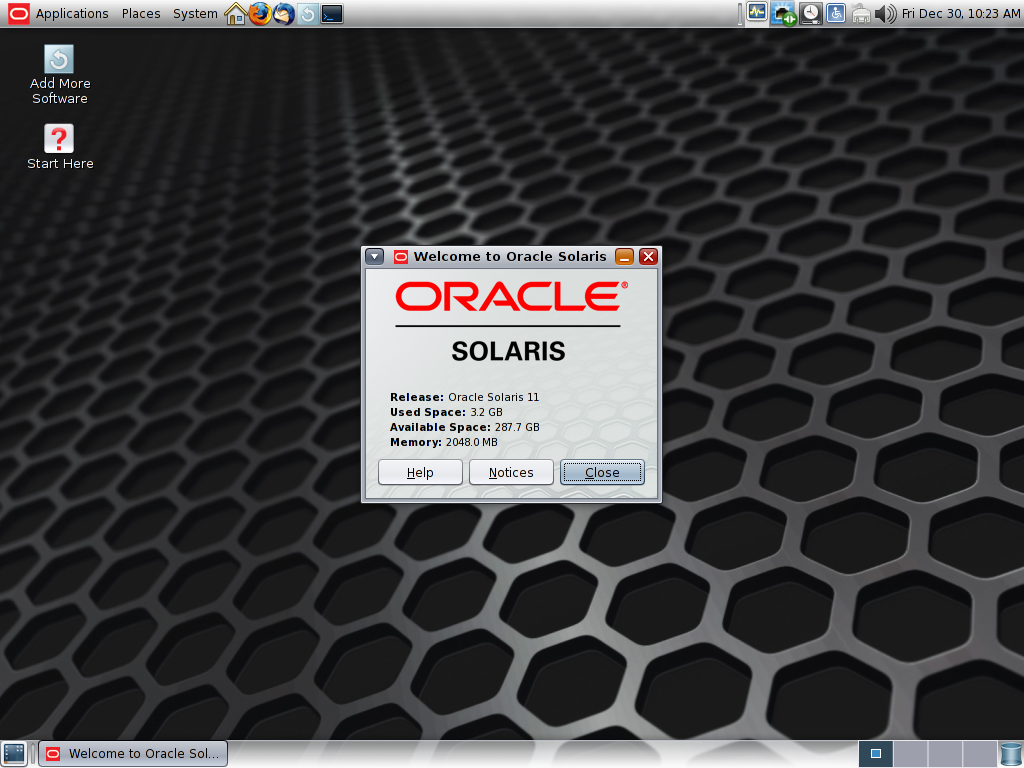


В дистрибутив Solaris 10 (release11/06) уже включены следующие пакеты mysql: Второй способ - это скачать бинарные, скомпилированные под Solaris, файлы mysql-5.0.41-solaris10-sparc-64bit.tar.gz. shell> cd /opt/mysql.
Sun, Sun Microsystems, логотип Sun, логотип Solaris, логотип Java системы с зонами с помощью Solaris Live Upgrade ( Solaris 10.
